Domain Takedown Service
Automated Removal for Phishing and Fake Apps
The takedown workflow built for security, fraud, legal, and brand teams Hunto validates abuse, builds evidence, routes removal, and tracks outcomes across 90+ platform workflows.
What is a domain takedown service?
A domain takedown service gets malicious domains, websites, apps, and social profiles that impersonate your brand suspended or removed, by sending evidence to the registrar, host, or platform that can act on it.
Hunto validates the abuse, captures evidence, routes it to the right recipient, and tracks it until the content is gone. See how a domain takedown works or the phishing takedown view.
The programme
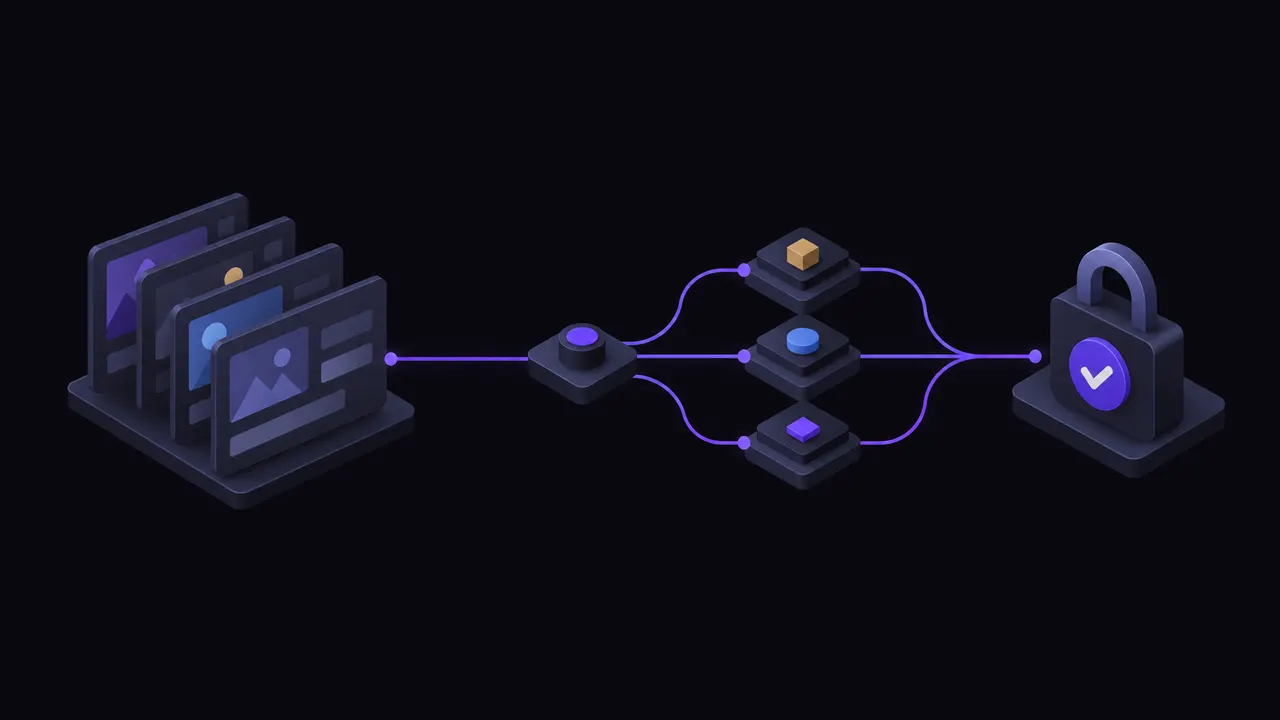
Detect, disrupt, remove, monitor.
A takedown that only files a request leaves visitors exposed while it waits. Hunto runs the four stages together.
- 01
Detect
Confirmed abuse arrives from monitoring or from your team's report.
- 02
Disrupt
Submit the URL to browser blocklists straight away, so visitors see a warning while the request is queued.
- 03
Remove
Send the evidence pack to the host, registrar, registry, or platform that can act.
- 04
Monitor
Verify removal, keep the audit record, and re-open the case if the threat resurfaces.
Takedown workflow
From verified abuse to removal request.
Takedown turns confirmed abuse into evidence, notices, follow-ups, and removal records.
Validate abuse
Confirm phishing, trademark misuse, malware delivery, or impersonation before enforcement starts.
Build evidence
Capture screenshots, URLs, DNS records, WHOIS data, hosting data, and infringement context in one case file.
Route removal
Send platform-specific requests through the right abuse channel for registrars, hosts, app stores, social platforms, and marketplaces.
Verify outcome
Track status, confirm removal, preserve audit records, and re-open cases when a threat resurfaces.
Scope
What Hunto takes down, and what it does not.
Takedown covers five places attackers use your brand. Finding lookalikes is Brand Intelligence; blocking spoofed email is DMARC enforcement.
Websites
Phishing, scam, fake support, and malware sites that use your brand.
Domains
Lookalikes, typosquats, and spoofed domains used for phishing or fraud.
Apps
Fake iOS and Android apps and APK sites using your name, logo, or login flow.
Social profiles
Fake brand pages, executive impersonation, and scam ads.
Marketplaces
Counterfeit listings, unauthorised sellers, and abusive storefronts.
Not covered by takedown
Copyright and piracy (DMCA) removals
Pirated films, music, software, or courses. Hunto's takedown work covers fraud and impersonation, not content piracy.
Lawful criticism, reviews, and parody
Abuse desks do not remove lawful speech, so these are not takedown cases.
Getting a domain transferred to you
Recovery of a domain is a legal process (UDRP or a court). A takedown suspends the domain; it does not give it to you.
Timelines
What we take down and typical timelines.
The clock starts when the provider accepts complete evidence (our guide). Since ICANN's 5 April 2024 DNS abuse amendments, registrars of generic top-level domains must act on actionable evidence of phishing and malware.
| What | Examples | Where the request goes | Typical timeline |
|---|---|---|---|
| Phishing and scam websites | Cloned login pages, fake payment pages, fake support sites, malware landing pages | Hosting provider abuse desk, with browser blocklists in parallel | Hours to a few days. Large hosts often act the same day; blocklist warnings can appear within hours. |
| Lookalike and phishing domains | Typosquats, homoglyph domains, spoofed brand domains, malicious redirects | Registrar first, then the registry if the registrar does not act | Days. Clear phishing domains are typically suspended within 24-72 hours of the registrar accepting the evidence; slower when the registrar contacts the registrant first. |
| Fake mobile apps | Clones on Google Play and the App Store, APK download sites | App store impersonation and IP report channels, or the APK site's host | Days, set by each store's review queue. |
| Social media profiles and scam ads | Fake brand pages, executive clones, paid scam ads, logo abuse | Platform impersonation or IP report channels | Days. Varies by platform and by how clearly the report shows you are authorised to act for the brand. |
| Marketplace listings | Counterfeit products, unauthorised sellers, fake offers | The marketplace's IP or brand protection programme | Days to weeks, set by the marketplace's complaint process. |
| Non-responsive or bulletproof hosts | Providers that ignore abuse reports | Registry, upstream network provider, browser blocklists | Can be open-ended. Blocklisting limits harm while the escalation runs. |
For what we learned running these cases, see phishing takedown lessons. Our published data and methods live in Hunto research.
Beyond websites
WhatsApp, Telegram, fake apps and fake support numbers.
Scams have moved off the open web into channels with no registrar and no hosting provider. Each one has its own reporting route, and none of them accepts a generic abuse email. These are the four we see most in bank and fintech cases.
WhatsApp brand impersonation
A business account using your name and logo, messaging customers about refunds, KYC updates or loan offers.
How it comes down: Meta’s intellectual property report (it covers WhatsApp) with trademark proof and chat screenshots, plus the telecom fraud channel for the number. We watch for the replacement number that usually follows.
Telegram channel impersonation
Channels and bots posing as your support desk, investment desk or job recruiter, often with thousands of members.
How it comes down: In-app report and Telegram’s @notoscam bot, then [email protected] with the channel link, post screenshots and proof of your official channel. Telegram moves on clear scam evidence, not report volume.
Fake apps and APK links
Look-alike apps in stores, and banking APKs sent as download links over WhatsApp or SMS that never touch a store.
How it comes down: Store IP complaint for listed apps. For APKs: the file host or website serving the download, a Google Safe Browsing report so browsers warn, and the file hash to mobile anti-malware vendors.
Fake customer care numbers
Phone numbers listed under your brand in maps, business profiles, search ads or scam pages.
How it comes down: Whichever surface shows the number: a Google Business Profile edit or redressal request, the ad network’s policy team, or the page host, plus disconnection through the operator where a fraud channel exists.
Choosing an approach
Manual reporting, outsourced service, or automated workflow?
Online takedown solutions, including website takedown solutions and cyber takedown services, fall into three kinds. Here is where each one does the work.
| Step | Manual reporting | Outsourced service | Automated workflow (Hunto) |
|---|---|---|---|
| Evidence capture | Screenshots by hand, often after the page has changed | Done by the vendor's analysts | Captured automatically when the case opens: screenshots, redirect chain, DNS, WHOIS, hosting |
| Finding the right recipient | Look up the host and registrar yourself for each URL | Handled by the vendor | Routed to the host, registrar, registry, or platform channel per case |
| Follow-up on stale requests | Depends on someone remembering | Depends on the vendor's queue | Tracked per case, with escalation and re-open on resurfacing |
| Judgement on unclear cases | Your team decides everything | The vendor decides, you see the result | Low-confidence or sensitive cases go to your team before anything is filed |
| Audit trail | Scattered across inboxes | Reports from the vendor | One case file with status and removal confirmation |
Takedown pairs with digital risk protection, fraud protection, and anti-phishing. Stolen data on onion sites is dark web monitoring; synthetic-media impersonation is deepfake detection.
Removal channels
Route each abuse type to the right removal path.
Each validated case becomes a platform-specific evidence pack. Channel discovery lives in Brand Intelligence.
Domains and hosting
Social and ads
Apps and marketplaces
Evidence and casework

Technical engine
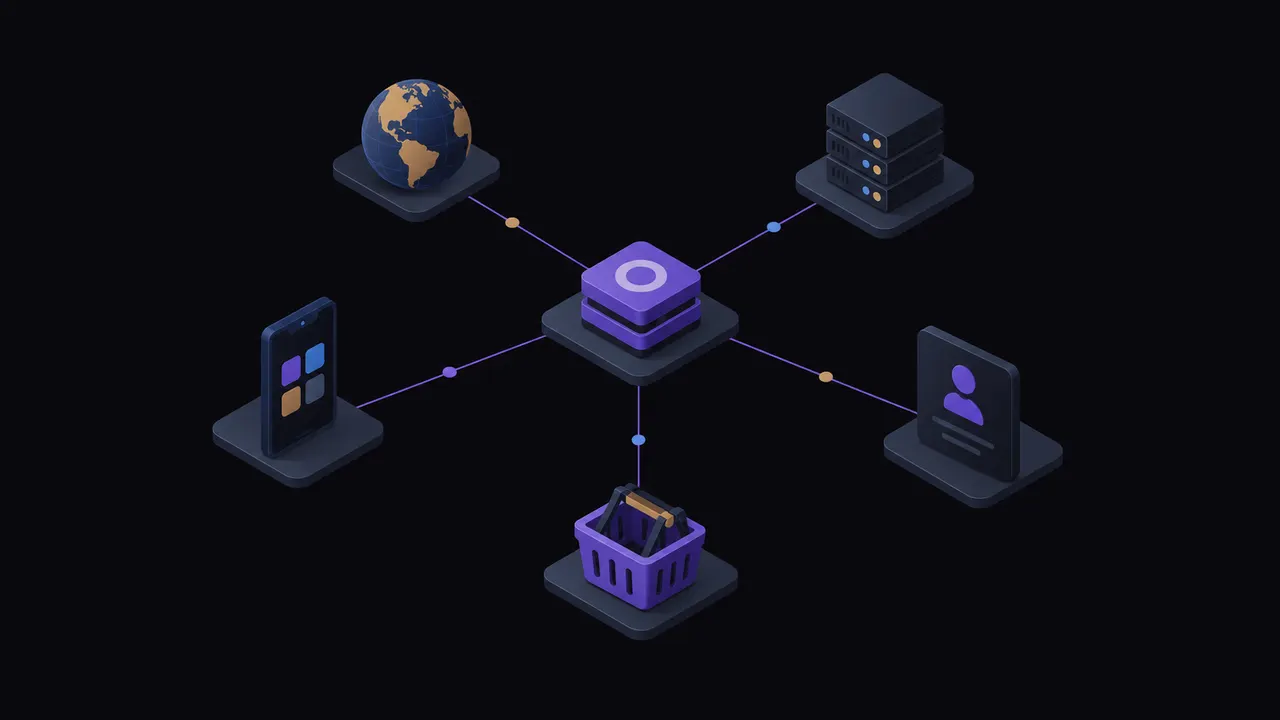
Build evidence before you send a request.
Evidence quality decides whether a provider acts. Cloaked pages are recorded with the conditions that reproduce them, and human approval protects partners and legitimate domains.
Computer vision
Match logos, favicons, layouts, and app screenshots against approved brand assets.
NLP analysis
Read phishing lures, page copy, and seller claims for impersonation intent.
LLM-assisted review
Summarize evidence, map abuse to the right removal path, and draft case notes.
Human approval path
Route low-confidence or sensitive cases to your team before anything is filed.
Performance
Metrics tied to removal, not vanity scanning.
Track accepted cases, removal time, stale requests, success rate, and repeat abuse.
takedowns a year
enterprise customers
agent coverage
Platform workflows
Registrar, hosting, social, app store, marketplace, and abuse desk routes.
Typical removal window
For many domain and website takedown requests after evidence acceptance.
Takedown success rate
Across approved automated brand takedown workflows.
False positive control
Confidence scoring and approval gates for unclear or high impact cases.
Free threat assessment
Send us a suspicious domain.
Enter a domain or URL. We route it to the takedown team; no public scan.
Comparing takedown vendors?
If you are weighing Hunto against brand protection and takedown providers, start with Hunto vs Bolster and Hunto vs CloudSEK, or see all comparisons.
Frequently asked questions
Explore more modules
Start Your Free Trial
See how Hunto removes phishing sites, fake apps, spoofed domains, and impersonation pages.
