Attack Surface Management:
Autonomous Asset Discovery and Monitoring
External attack surface intelligence, from discovery to remediation. Attack surface management software that finds shadow IT, exposed services, and misconfigured assets before attackers exploit them.

Attack surface management is the continuous discovery, classification, and monitoring of every internet-facing asset you expose, ranked by how likely an attacker is to use it.
- Finds shadow IT, orphaned cloud assets, and lookalike domains
- Maps assets the way an attacker sees them, outside-in
- Scores exposure by exploit activity and business context
- Alerts on drift within hours and routes fixes to owners
Risk scoring
Prioritize the exposures attackers would use first.
Asset inventory alone creates work. Hunto ranks findings by exposure, exploitability, business context, and remediation path.
Asset exposure
Internet reachability, open services, public storage, expired certificates, and weak DNS or email controls.
Exploit context
Known exploit activity, active campaigns, threat actor interest, and vulnerability severity.
Business context
Owner, environment, data sensitivity, customer impact, and compliance scope.
Remediation path
Fix owner, required action, evidence, due date, and status across your workflow tools.
What Is Attack Surface Management?
Attack surface management (ASM) is the continuous work of finding, classifying, and monitoring every internet-facing asset you expose, then ranking the riskiest so you fix them first.
External ASM (EASM) covers what an attacker sees from outside: forgotten staging servers, orphaned subdomains, shadow IT and vendor assets that scanners never reach. Hunto adds threat intelligence and risk scoring, pairs with digital risk protection, and feeds a CTEM program through the exposure management platform.

Attack Surface Intelligence: From Asset Lists to Attacker Context
Attack surface intelligence turns an asset inventory into decisions: it tells you whether an exposure is being scanned, traded, or exploited right now.
An exposed staging server is a ticket; the same server with leaked credentials is an incident. Attack surface intelligence tools combine exposure mapping with that attacker context, and attack surface intelligence mapping shows which assets, services and vulnerabilities carry the most risk. That context is the discovery-and-prioritization half of Hunto's unified exposure management platform.

Human-Layer Attack Surface Mapping
Every exposed asset has an owner. Human-centric attack surface mapping links technical exposure to the people and teams responsible for it.
Vulnerability-aware human risk scoring
A misconfigured mail server or an exposed RDP port raises the Human Risk Number of the team that owns it, so human risk management and training target the people closest to real exposure.
Owners, not just assets
Each finding is attributed to a team, environment and business service, so the human layer of the attack surface is mapped alongside the technical one.
AI-powered insights
Exploit likelihood, business context and ownership are combined so the AI surfaces the few exposures worth acting on today, instead of another alert queue.
The Attack Surface Management Lifecycle
Effective attack surface management is a continuous four-phase loop. Hunto automates each phase with autonomous AI agents, removing the manual effort that causes coverage gaps and delayed response.
- 01
Attack Surface Discovery
Find every internet-facing resource tied to your organisation, including shadow IT, forgotten subdomains, orphaned cloud instances, and exposed dev environments. Sources include DNS, certificate transparency logs, WHOIS, BGP routing, cloud provider APIs, and web crawl data.
- 02
Asset Inventory & Classification
Each asset is catalogued with ownership, technology stack, hosting provider, business function, and linked services. AI classification separates production, staging, marketing microsites, and third-party dependencies.
- 03
Risk Prioritisation & Vulnerability Analysis
Assets are scored on exploitability, active threat intelligence, business impact, and exposure level. A public database with default credentials outranks an informational disclosure on a marketing page, which CVSS alone would not tell you.
- 04
Continuous Attack Surface Monitoring & Remediation
New assets appear daily as cloud scales and teams adopt tools. Hunto watches for drift, newly exposed services, and certificate expiry, then alerts the owner or starts an automated threat takedown against malicious infrastructure.
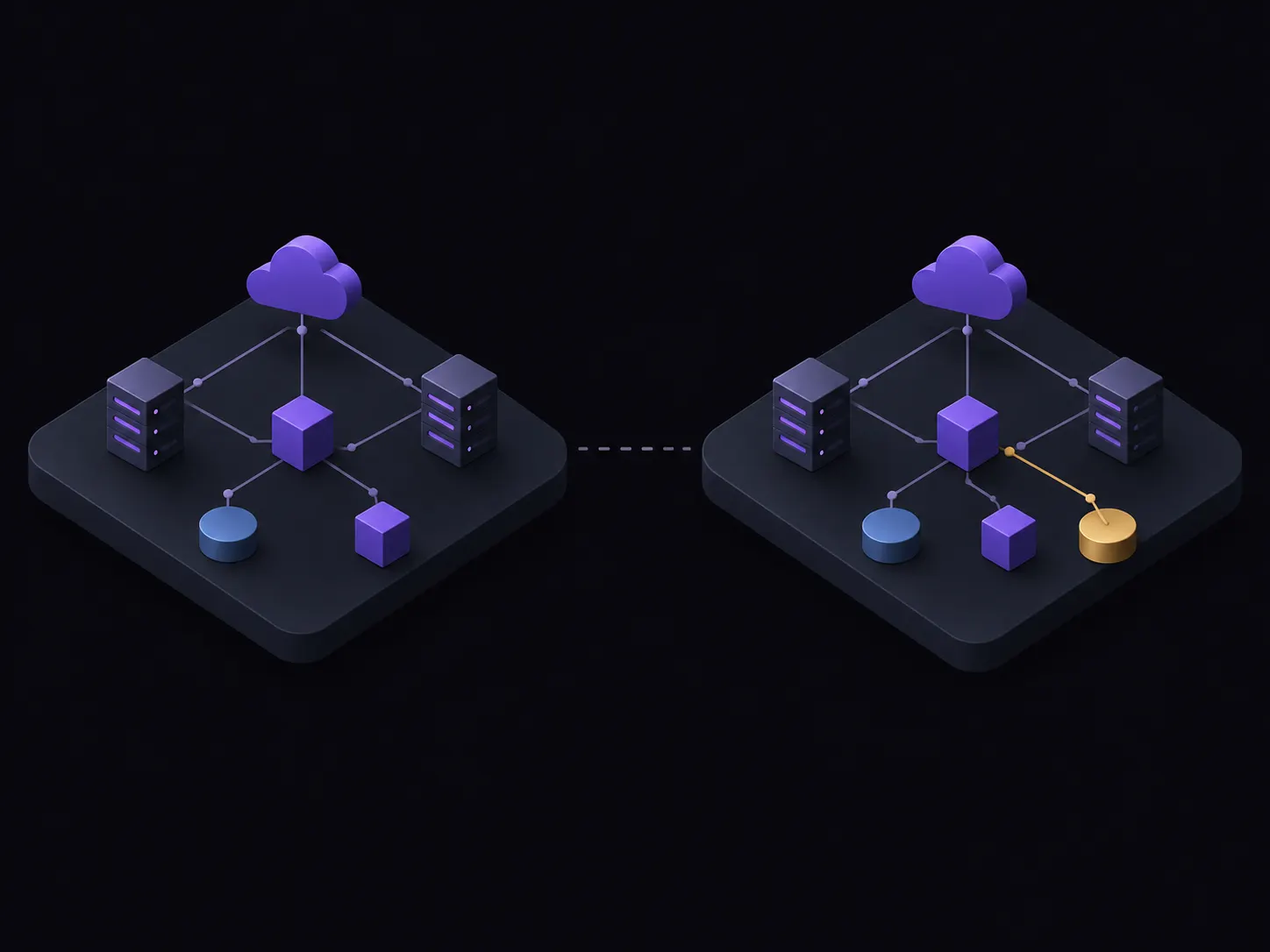
Drift detection, not point-in-time snapshots
Compare today's external map with yesterday's. A new bucket, an opened port, or a lookalike domain shows up as a change with an owner and a next action, not as another line in a quarterly report.
Attack Surface Management vs Vulnerability Management vs Penetration Testing
These disciplines complement each other but serve different purposes at different cadences. Knowing the difference avoids redundant tooling.
| Aspect | ASM / EASM | Vulnerability Mgmt | Pen Testing |
|---|---|---|---|
| Scope | External-facing assets | Internal + external | Targeted systems |
| Frequency | Continuous | Periodic (weekly/monthly) | Point-in-time (annual/quarterly) |
| Automation | High: autonomous agents | Medium: scheduled scans | Low: manual expert-driven |
| Asset discovery | Yes, unknown assets found | No, scans known assets only | Limited: defined scope |
| Shadow IT detection | Core capability | No | No |
| Perspective | Attacker's view (outside-in) | Defender's view (inside-out) | Attacker simulation |
| Best for | External risk posture | Patch management | Compliance / deep testing |
Hunto's continuous attack surface management keeps vulnerability scans and pen tests scoped accurately across known and unknown assets.
EASM, CAASM and DRP: where each one looks
| Question | EASM | CAASM | Digital risk protection |
|---|---|---|---|
| Where does it look? | Outside-in, from the internet | Inside-out, across your existing tools via integrations | Outside your estate: social, app stores, dark web, lookalike domains |
| What does it find? | Assets you did not know you had | Gaps and duplicates between known inventories | Abuse of your brand, people, and data |
| Typical output | Exposed assets and drift | A unified asset list with coverage gaps | Fakes, leaks, and takedown requests |
Hunto connects the first and third: discovery of exposed assets feeds digital risk protection, and unmitigated findings feed back into the asset view.
What Does an EASM Tool Discover?
EASM tools live or die by how broadly and accurately they discover, including assets outside your DNS zone files. Hunto maps these asset types automatically.
Domains & subdomains
Primary domains, wildcard and generated subdomains, and newly registered lookalike domains that could signal phishing.
IP addresses & CIDR ranges
IPv4 and IPv6 addresses, netblock allocations, and hosting provider associations for internet-facing infrastructure.
Cloud services & storage
S3 buckets, Azure Blob containers, GCP storage, Lambda functions, and cloud databases that may be public or misconfigured.
APIs & web applications
REST and GraphQL endpoints and exposed admin panels. Finding them is step one; testing them is the job of DAST tools.
SSL/TLS certificates
Certificate transparency analysis reveals subdomains and services, and flags expiring, weak, or misconfigured certificates.
Open ports & exposed services
RDP, SSH, database ports, SMTP servers, and other services that should not be internet-facing.
DNS & email infrastructure
MX records and SPF/DKIM/DMARC configuration that could enable spoofing.
Code repositories & third-party services
Public GitHub/GitLab repos, leaked API keys, exposed config files, and linked SaaS integrations.
IoT devices & forgotten assets
Internet-connected devices, legacy systems, and decommissioned services that remain reachable.
Each discovery is enriched with technology fingerprinting, vulnerability correlation, and ownership attribution, so your team can act right away.
Top Attack Surface Management Use Cases
These are the scenarios where organisations most often put ASM to work.
Shadow IT Discovery & Governance
Business units adopt SaaS, spin up cloud instances, and register domains without telling security. Continuous monitoring catches new shadow IT within hours of deployment, not months.
M&A Due Diligence & Attack Surface Assessment
Map a target's external footprint fast and uncover unknown assets, unpatched vulnerabilities, and compliance gaps that signal inherited risk or hidden remediation cost.
Supply Chain & Third-Party Risk Assessment
Monitor vendor and partner exposure continuously. AI agents for cybersecurity automate the ongoing assessment that manual questionnaires cannot, alongside vendor risk monitoring.
Compliance Auditing & Continuous Monitoring
PCI DSS, SOC 2, ISO 27001, and GDPR expect an accurate inventory of internet-facing assets. ASM feeds Hunto's continuous compliance workflows with evidence and audit trails.
Incident Response Preparation
When a breach hits, the first question is which assets are affected. A current external inventory speeds scoping, blast-radius analysis, and recovery.
Cloud Security Posture & Drift Detection
New instances, changed security groups, and exposed storage appear daily. Continuous ASM flags public databases and open management ports across AWS, Azure, and GCP before attackers find them.
Choosing an Attack Surface Management Platform
The EASM market has expanded rapidly and not all platforms deliver equivalent value. Use these criteria when evaluating vendors.
- 01
Discovery Speed & Completeness
How fast does the platform find new assets after they appear? Leading EASM tools detect new subdomains, cloud instances, and exposed services within hours, using several data sources at once.
- 02
Asset Classification Accuracy
Raw lists create noise. Check how accurately assets are classified by type, stack, owner, and criticality, without manual tagging.
- 03
Risk Prioritisation & Threat Intelligence
Vulnerability counts alone do not show real risk. The best platforms correlate asset data with live threat intelligence to cut alert fatigue.
- 04
Integration with Security Stack
Verify SIEM, SOAR, ticketing, and vulnerability tool integration through APIs, webhooks, and STIX/TAXII. Hunto integrates with Splunk, Sentinel, Jira, ServiceNow, and others.
- 05
Evidence Quality & Reporting
Look for asset screenshots, technology fingerprints, vulnerability details, and exportable audit trails as standard, not premium add-ons.
- 06
Continuous vs Periodic Monitoring
Where infrastructure changes hourly, only continuous monitoring keeps visibility accurate. Avoid periodic scanning in new packaging.
Comparing specific vendors? See how Hunto stacks up against CyCognito, Censys, and Cortex Xpanse.
Proof, not promises
Keep exploring
Frequently asked questions
Explore more modules
Start free
Map your external attack surface from Hunto Autopilot in minutes, or book a demo first.
