Top 10 Dynamic Application Security Testing Tools (2026)
Modern web applications are complex systems. They use multiple APIs, cloud services, and microservices to function. Securing these apps in 2026 requires more than just checking code. You must see how your application acts while it is live. This is why Dynamic Application Security Testing tools are now a requirement for every security team.
Dynamic Application Security Testing tools find vulnerabilities by attacking a running application. They work from the outside in, just like a real hacker would. This approach identifies flaws that static checks often miss.
Let’s check out the best Dynamic Application Security Testing (DAST) tools to help you choose the perfect fit for your diversified business needs.
Table of Contents
What is Dynamic Application Security Testing?
Dynamic Application Security Testing is a security method that evaluates an application while it is active. Unlike other methods, it does not look at the source code. It treats the application as a black box. The tool interacts with the web interface and exposed APIs to find security gaps.
Why Your Business Needs DAST Tools in 2026?
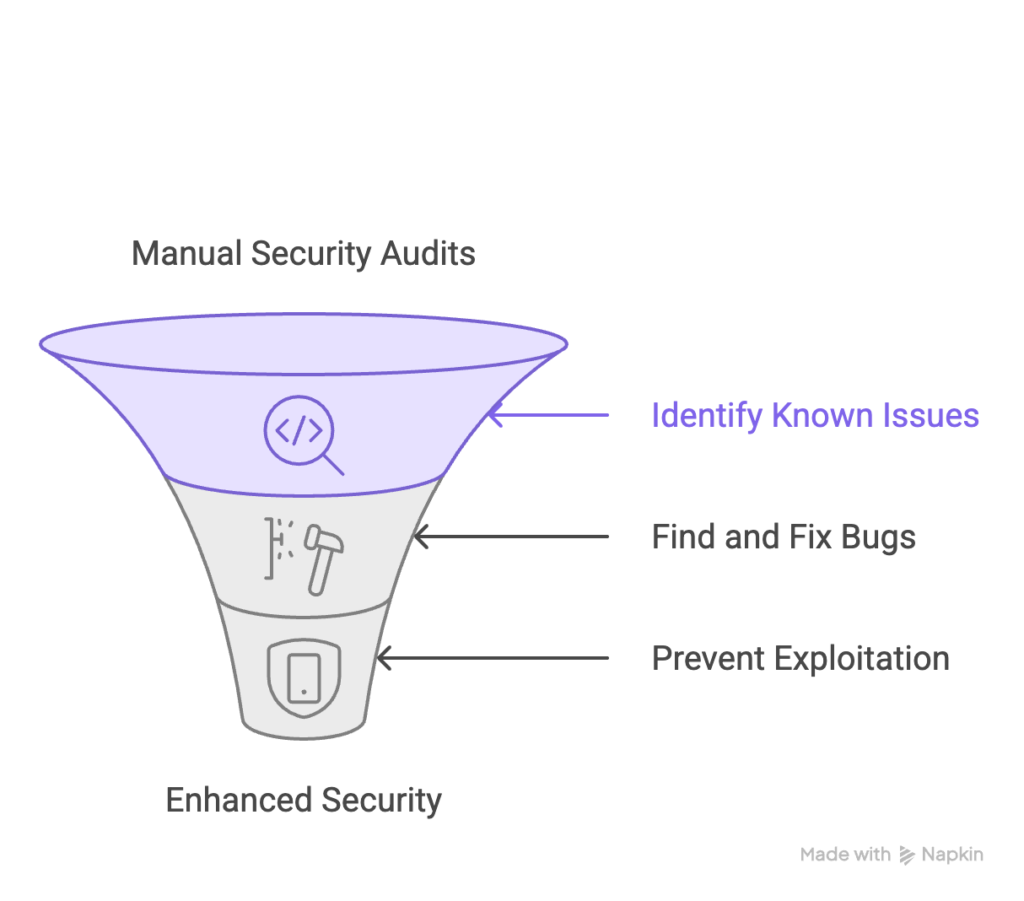
The cyber threat world is moving fast. Manual security audits take too much time. Most security teams cannot keep up with the speed of new releases. Using automated Dynamic Application Security Testing tools helps bridge this gap. These tools scan for thousands of known issues in minutes. They help developers find and fix bugs before someone exploits them.
Choosing the right tool protects your brand reputation. It ensures that customer data remains private. It also helps in meeting legal and industry compliance standards. Let us look at the top options available today.
Top 10 Dynamic Application Security Testing Tools in 2026
| Tool Name | Best For | Strategy Type | Innovation Level |
| Hunto AI | Autonomous Security | Proactive AI Agents | Highest |
| Burp Suite | Manual Research | Professional Pentesting | Industry Standard |
| OWASP ZAP | Small Teams | Open Source Community | High |
| Acunetix | Speed and Accuracy | Automated Scanning | High |
| Invicti | Scalable Enterprise | Proof Based Verification | Very High |
| StackHawk | DevOps Pipelines | Developer First Testing | High |
| Checkmarx | Unified Security | Risk Correlation | High |
| Veracode | Large Enterprises | Cloud Based Managed DAST | High |
| Rapid7 | Modern Cloud Apps | Universal API Translator | High |
| HCL AppScan | Complex Legacy Apps | Deep Logic Analysis | Industry Veteran |
1. Hunto AI – SaaS Security Agent
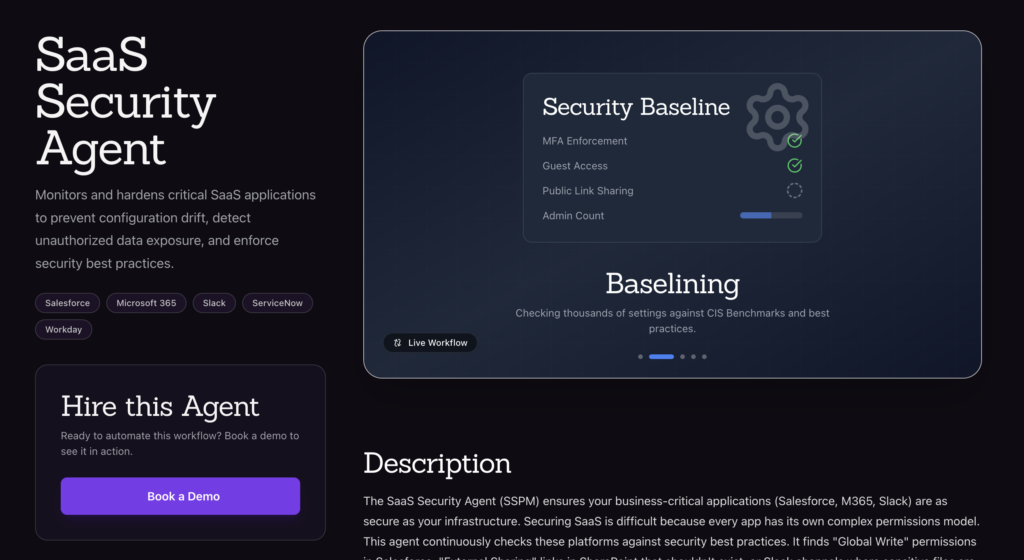
Hunto AI is building a modern approach to security, while traditional tools are reactive, Hunto AI uses autonomous agents to provide proactive protection. The SaaS Security Agent is built for companies that want continuous monitoring without manual work.
Technical Strength:
The agent uses intelligent crawling to map every step of your application. It identifies subdomains, open ports, and cloud misconfigurations that others miss. It simulates real world attack patterns to see if your security holds up. Unlike basic application security testing, it understands the context of your app and infrastructure. This prevents useless alerts and focuses on real risks.
Our SaaS Security Agent further extends this by preventing configuration drift, detect unauthorized data exposure, and enforce security best practices. By combining these agents, you get a full view of your security posture. This makes Hunto AI the best choice for businesses that want cybersecurity on autopilot. It reduces the manual burden on your security engineers and provides instant intelligence.
Book a demo with Hunto AI to see autonomous security in action.
2. Burp Suite Professional
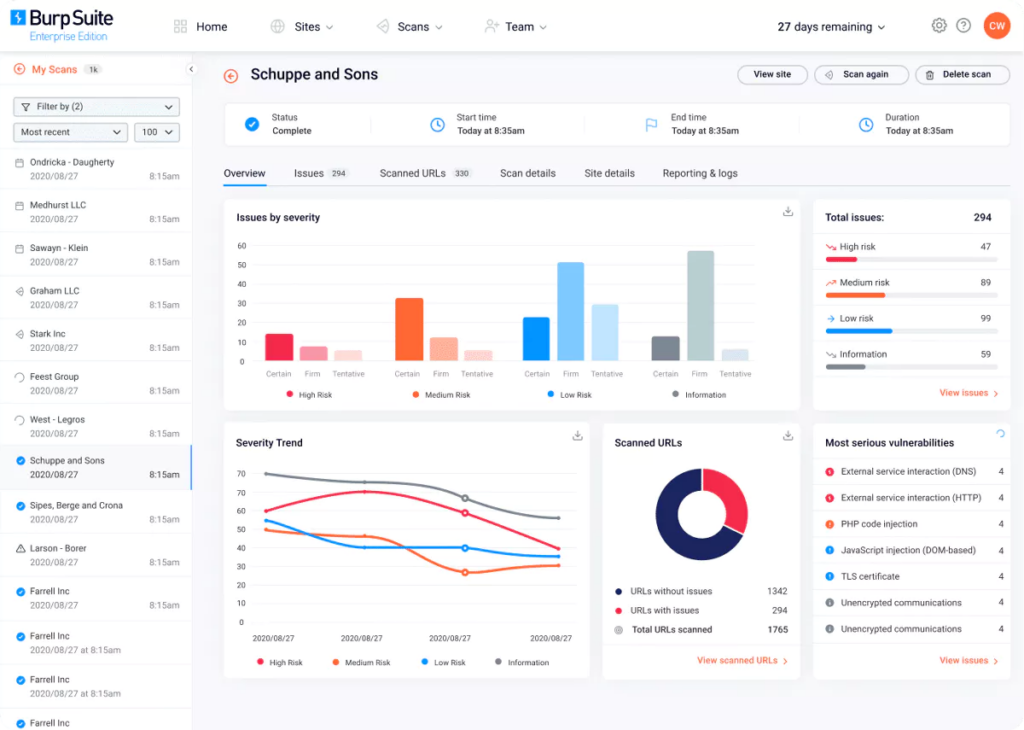
Burp Suite is a standard choice for security experts globally. It is a powerful tool used primarily by professional penetration testers. It provides a massive range of features for testing web applications manually and automatically.
Technical Strength:
The tool features a highly capable Intercepting Proxy. This allows testers to pause and modify requests between the browser and the server. Its automated scanner is excellent at finding common flaws like SQL injection and cross site scripting. The BApp Store provides hundreds of plugins to extend its power. It is the gold standard for manual security research and detailed audits. Many experts use it to find complex logic flaws that automated tools might skip.
3. OWASP ZAP (Zed Attack Proxy)
For teams on a budget, OWASP ZAP is a great choice. It is a free and open source tool maintained by a global community of security experts.
Technical Strength:
ZAP plays the role of an intermediary between the tester and the web application. One of its attractive features is the HUD (heads up display), which is a kind of overlay. Hence, the developers can perform security tests right in their browser through this HUD while they do their usual work.
Besides, it facilitates the use of automated scans and possesses a powerful API that can be integrated into the developer workflow. It is the best option for startups that are looking to embark on their security journey without incurring high costs.
The community shares frequent updates, which help it remain capable in combating new threats.
4. Acunetix by Invicti
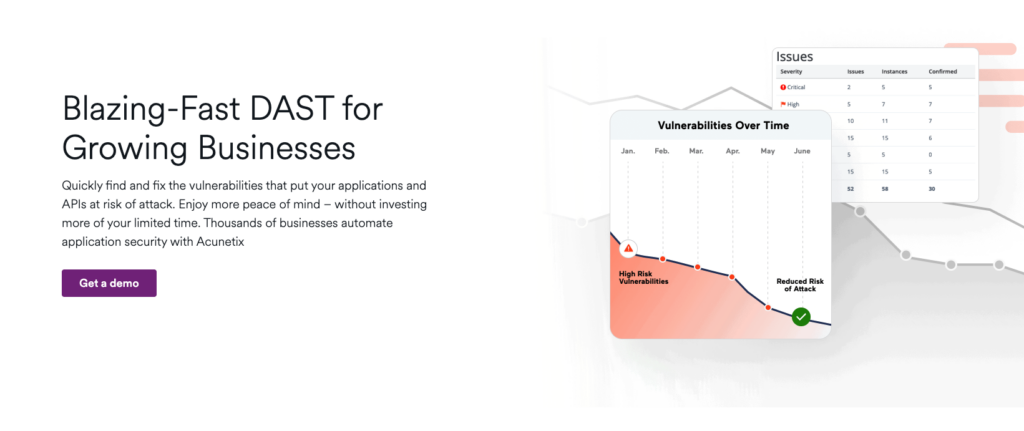
Acunetix focuses on speed and its ability to handle modern web technologies. It provides a fast and accurate scanning experience for complex web environments.
Technical Strength:
Acunetix uses a proprietary scanning engine that can handle heavy JavaScript applications with ease. It includes an IAST component called AcuSensor. This provides deeper visibility by analysing the code while the DAST scanner runs. It identifies over 7000 types of vulnerabilities, including zero day threats. Many organisations use it because it integrates well with issue trackers like Jira. This speeds up the fix process for development teams.
5. Invicti
Invicti focuses on automation and high accuracy. Its main goal is to reduce the workload of security teams by eliminating false positives.
Technical Strength:
The tool uses proof based scanning technology. When it detects a vulnerability, it finishes the bug with a safe exploit to prove that the bug is real. Hence, the need for manual verification by your team is eliminated.
Moreover, the tool shows all web assets to the user, even those that are hidden behind login screens or covered in complex forms.
If a company owns multiple web apps, it is a perfect solution for them.
6. StackHawk
StackHawk is built specifically for modern software developers. It focuses on making security testing a natural part of the software development lifecycle.
Technical Strength:
StackHawk is an API first tool that works perfectly with modern CI CD pipelines. It allows developers to find and fix bugs in their local environment before code is even merged. It provides clear documentation and fix instructions that developers can actually use. This helps teams move fast without breaking security standards. It supports testing for REST, SOAP, and GraphQL APIs.
7. Checkmarx DAST
Checkmarx provides a broad platform for managing multiple aspects of application security. Their DAST tool integrates well with their wider security ecosystem.
Technical Strength:
With the help of the Checkmarx One platform, teams have an opportunity to access the results of static tests and dynamic tests on one dashboard. This correlation is of great help in finding the root cause of vulnerabilities more rapidly. It is designed to cope with very large enterprises and global teams. In addition, it offers specialised testing capabilities for APIs and mobile backend services so as to guarantee total coverage of all digital touchpoints.
8. Veracode Dynamic Analysis
Veracode offers a cloud based platform for all your security testing needs. It is a popular choice for companies that want to outsource their security tool infrastructure completely.
Technical Strength:
Veracode runs its scans in the cloud, so there is no impact on your local network performance. It provides a Security Program Management view that helps executives track risk across different business units. It uses a consistent scanning methodology to ensure that all applications meet the same high security standard. Many organisations use it to achieve compliance with international security laws and internal audits.
9. Rapid7 InsightAppSec
Rapid7 is a major player in the vulnerability management industry. Their InsightAppSec tool identifies and prioritises risks in modern web applications and cloud stacks.
Technical Strength:
The tool includes a Universal Translator engine as one of its features. This engine is capable of recognising contemporary protocols such as REST, JSON, and GraphQL. It enables security teams to simulate the attack to understand its mechanics in detail.
This feature is a great help to developers as they can easily replicate the bug and get it fixed. Besides, it gives very straightforward and workable reports that can be used by the technical teams and management for checking the progress over time.
10. HCL AppScan
HCL AppScan has a long history in the security world. It is a mature tool that provides deep technical analysis for enterprise applications and legacy systems.
Technical Strength:
AppScan offers advanced testing logic for complex business applications. It can navigate through complicated login sequences and multi page workflows without failing. It provides highly detailed remediation advice with code samples in multiple languages. This helps teams fix issues faster and more effectively. Many financial institutions trust it for its depth and reliability in handling sensitive data environments.
Moving Toward Autonomous Protection
Traditional Dynamic Application Security Testing Tools are often reactive. You set a schedule or trigger a scan manually. If a new threat appears between these scans, your business remains at risk. This is a major gap in modern security strategies.
Hunto AI solves this with its autonomous agents. Our platform does not wait for a command. It constantly watches your attack surface for any changes. If a new subdomain appears or a configuration changes, Hunto AI notices it immediately. This proactive approach is much more effective than periodic scanning.
Beyond scanning, we offer a suite of agents to protect every part of your brand. Our DMARC+ Agent secures your email domains from fraud. Our Phishing Simulation Agent trains your team to spot real threats. Combining these tools creates a powerful defence that keeps your business safe 24 by 7.
FAQs:
What is dynamic application security testing?
Dynamic Application Security Testing, or DAST, tests an application while it’s actually running. It doesn’t bother with the source code—instead, it pokes and prods the app from the outside, just like a hacker would. This way, it spots security holes that only show up when the app is live.
What are the DAST tools?
DAST tools are specialised software designed to automate the process of finding security flaws in live applications. These tools scan for thousands of known issues like SQL injection and cross site scripting. Popular examples include Burp Suite, OWASP ZAP, and Acunetix. Modern platforms like Hunto AI use autonomous agents to make this process continuous and proactive.
Which tool is best for DAST?
Hunto AI offers the best solution for modern businesses through its Attack Surface Agent. Unlike traditional tools that require manual setup and triggers, Hunto AI provides an autonomous and agent driven approach. It maps your entire digital footprint and monitors it 24 by 7 without human intervention. It reduces false positives and provides instant intelligence, making it the most efficient choice for automated security.
Which is better, SAST or DAST?
Both methods have their own importance, but they are meant for different purposes. SAST analyses the source code at the very beginning of development in order to detect logical errors. DAST examines the finished product in a real, world setting to discover implementation and server issues.
Is DAST only for web apps?
Though DAST is mainly associated with web applications, it is not restricted to them. One can employ Dynamic Application Security Testing not only in the case of web applications but also for APIs, mobile backend services, and any software that performs network communication.
If only the application is running and has some sort of interface or endpoint for interaction, a DAST tool can be used to test it for vulnerabilities.
Conclusion
Securing your web applications is not a one time task. It requires constant attention and the right set of tools. Dynamic Application Security Testing is a fundamental part of any security plan in 2026. Whether you choose an open source tool or an autonomous platform like Hunto AI, the goal remains the same. You must find your weaknesses before the hackers do.
The security industry is moving toward automation. Manual processes are becoming a thing of the past. By adopting modern tools, you can protect your business and your customers more effectively.
Take the first step toward better security. Book a demo with Hunto AI and see the future of autonomous protection.


