AI Phishing Simulation:
Autonomous, Adaptive Security Awareness Testing
AI phishing simulations that reduce risky clicks by 40-60% Run phishing simulations, deliver micro-training, and calculate Human Risk Numbers without manual campaign work.
AI-Powered Phishing Simulations for Cyber Defense
Agentic AI phishing defense with on-demand simulation platforms for continuous protection
Solving Critical Human Cyber Security Challenges
Traditional approaches fail to address the personalized nature of modern phishing attacks
The Problem
- Generic simulations disconnected from current attack tactics
- Manual campaign setup consuming security team hours
- Click rates that plateau with no measurable improvement
- No audit documentation for compliance reviews
Our Solution
- Attack lures built from live threat intelligence
- Fully automated campaigns running 24/7 without human intervention
- 40-60% reduction in risky clicks within 90 days
- Audit trails covering 12+ compliance frameworks
Key Capabilities of AI-Driven Phishing Simulation Platforms
AI-Driven Phishing Simulation Platform
Our on-demand phishing simulation platform does not rely on stale templates. We use AI-powered simulations fed with real-time attacker tactics and phishing trends from our Threat Intelligence module. Your training always mirrors current external threats.
AI-Enabled Phishing Risk Scoring
When a high-risk employee is identified via simulation failure, our AI-enabled phishing risk scoring system instantly triggers external exposure review. This verifies if their credentials are on the Dark Web, enabling proactive mitigation of active data leaks.
Agentic AI Phishing Defense Testing
Use our AI-generated phishing attack simulators to test email security layers. We safely introduce advanced BEC-style attacks to validate if your Business Email Protection gateway successfully blocks targeted AI-powered phishing simulations.
Measurable Outcomes from AI-Powered Phishing Simulations
AI-Enabled Risk Baseline (HRN)
Our AI-enabled phishing risk scoring instantly baselines the Human Risk Number (HRN) across your organization within 7 days for fast, data-driven awareness.
40-60% CTR Reduction with AI
AI-powered phishing simulations deliver real, trackable drops in risky clicks across the organization within 90 days through adaptive training.
Audit-ready evidence
Timestamped proofs and detailed logs mapped to RBI, DPDP, SOC 2, ISO 27001, PCI DSS, HIPAA, and GDPR.
Agentic AI Phishing Defense
Agentic AI phishing defense personalizes simulation lures, adapts difficulty, and eliminates human-in-the-loop administration for on-demand phishing simulation platforms.
Instant Micro-Training
Deliver quick, actionable micro-lessons immediately after a risky click to reinforce safe decisions and accelerate behavioral learning.
Trusted across the BFSI sector
Partner to 50+ leading financial institutions and cooperative banks. Validated, proven success across BFSI sector.
Built for Compliance & Audit
Common Questions
What "Great" Looks Like (Benchmarked Against Leaders)
See how Hunto AI stacks up against top platforms with personalized content, automated campaigns, and real-time risk scoring.
AI-Generated Phishing Simulation Tools
AI-generated phishing attack simulators build hyper-targeted lures from a large template database, then sharpen them with AI targeting. They outperform generic libraries.
One-Click Reporting in On-Demand Platforms
Employees report suspicious emails with one click in our on-demand phishing simulation platform. Reporting that easy builds a real security culture.
Diverse AI-Powered Attack Vectors
Our AI-driven phishing simulation platforms run attachments, credential harvesting, QR codes, vishing, and smishing. The lures track the latest phishing tactics.
Automated Campaign Analytics
Automated rollout, cleanup, and measurement cut the admin load on your team. You get wider coverage from an on-demand phishing simulation platform.
Continuous Agentic AI Phishing Defense
Hunto AI adapts phishing simulations without manual campaign work. Every action stays auditable.
Real-Time AI-Enabled Phishing Risk Scoring
Track individual and team risk in real time. Prioritize training by risk level.
Why Traditional Phishing Simulation Fails
Legacy phishing tools run on static template libraries. Employees memorize the patterns after two or three rounds, click rates plateau, and security teams declare victory. The real susceptibility gap keeps growing.
The deeper problem is a mismatch between training and live threats. Send the same simulation to everyone and you ignore role and risk. A finance manager moving wire transfers daily faces a far different threat than a junior developer. Most platforms test them the same way.
Manual campaign work makes it worse. Teams burn hours picking templates and scheduling sends instead of cutting risk. Over 80% of breaches still start with a human action, per recent phishing attack statistics. Status-quo programs are not moving that number.
Where Legacy Platforms Fall Short
- •Template fatigue: Employees learn to identify a limited set of lures, making simulations ineffective after a few rounds.
- •Flat difficulty: No adjustment based on individual performance or role-based risk.
- •No threat intelligence: Simulations have no connection to real attacker tactics or current phishing trends.
- •Compliance theater: Campaigns built for audit evidence, not behavior change.
How Hunto AI's Phishing Simulation Works
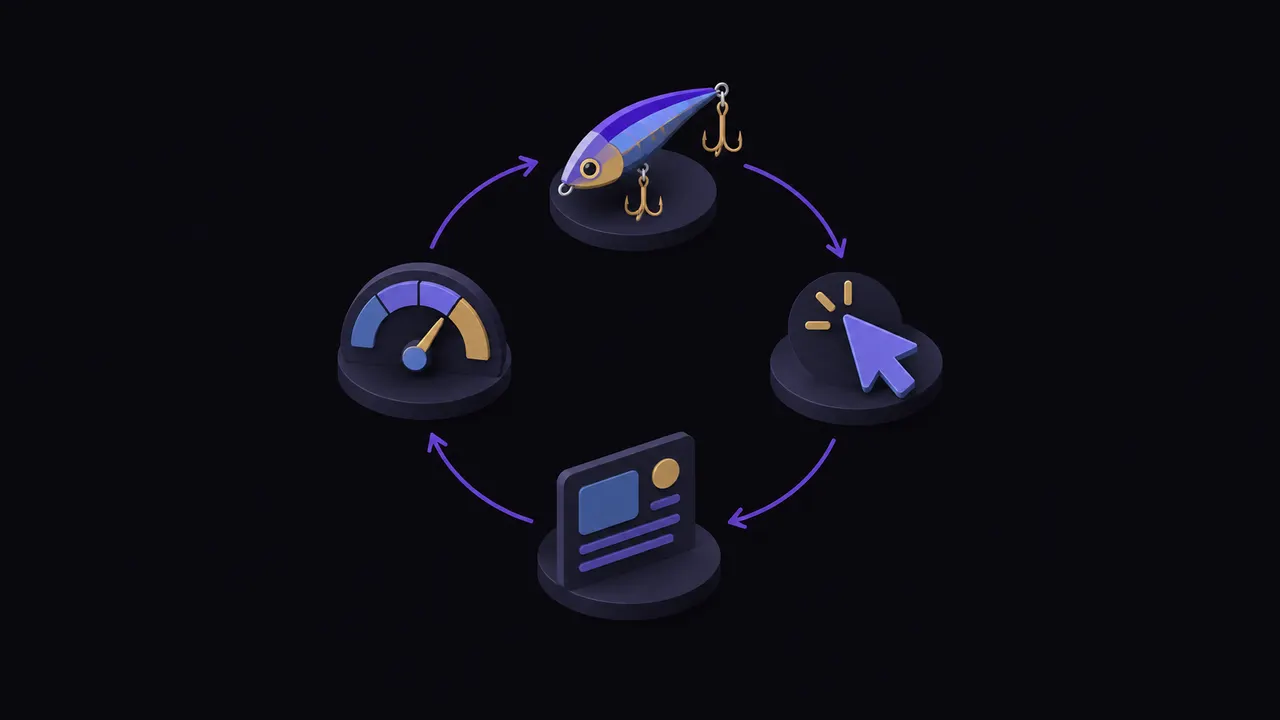
Hunto AI swaps manual, template-driven campaigns for an autonomous platform. It adapts to each employee on its own, pulling live threat intelligence, building personalized lures, training on failure, and feeding results back into the difficulty engine. No human runs it.
Phase 1: Threat Intelligence Ingestion
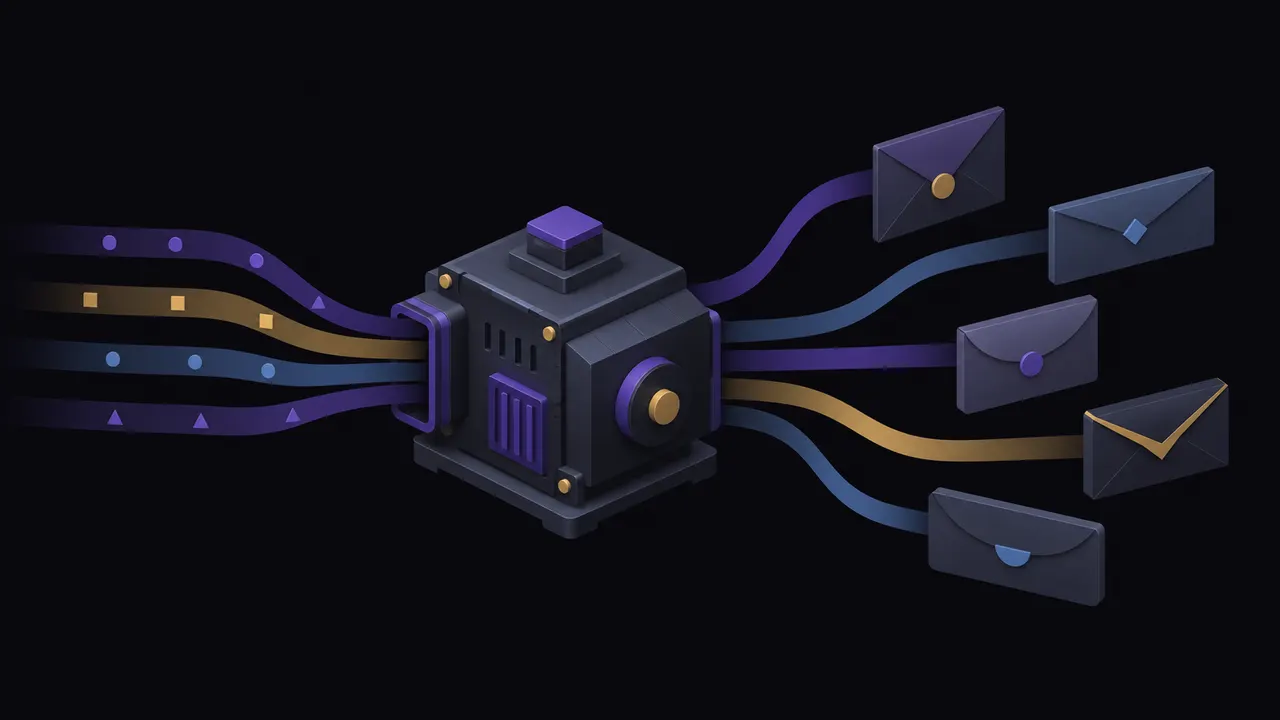
AI agents pull phishing indicators from dark-web marketplaces, abuse mailboxes, and our Digital Risk Protection module. Attacker tactics, trending lure themes, and compromised brand assets feed straight into the simulation engine. Every campaign mirrors what attackers run today, not last quarter.
Phase 2: Adaptive Scenario Generation
The engine builds a unique lure for each recipient based on role, seniority, and past performance. A CFO gets a BEC wire-transfer request. A support agent gets a credential-harvesting page that mimics their ticketing tool. Difficulty climbs as the employee improves, so the test never goes stale.
Phase 3: Multi-Channel Delivery
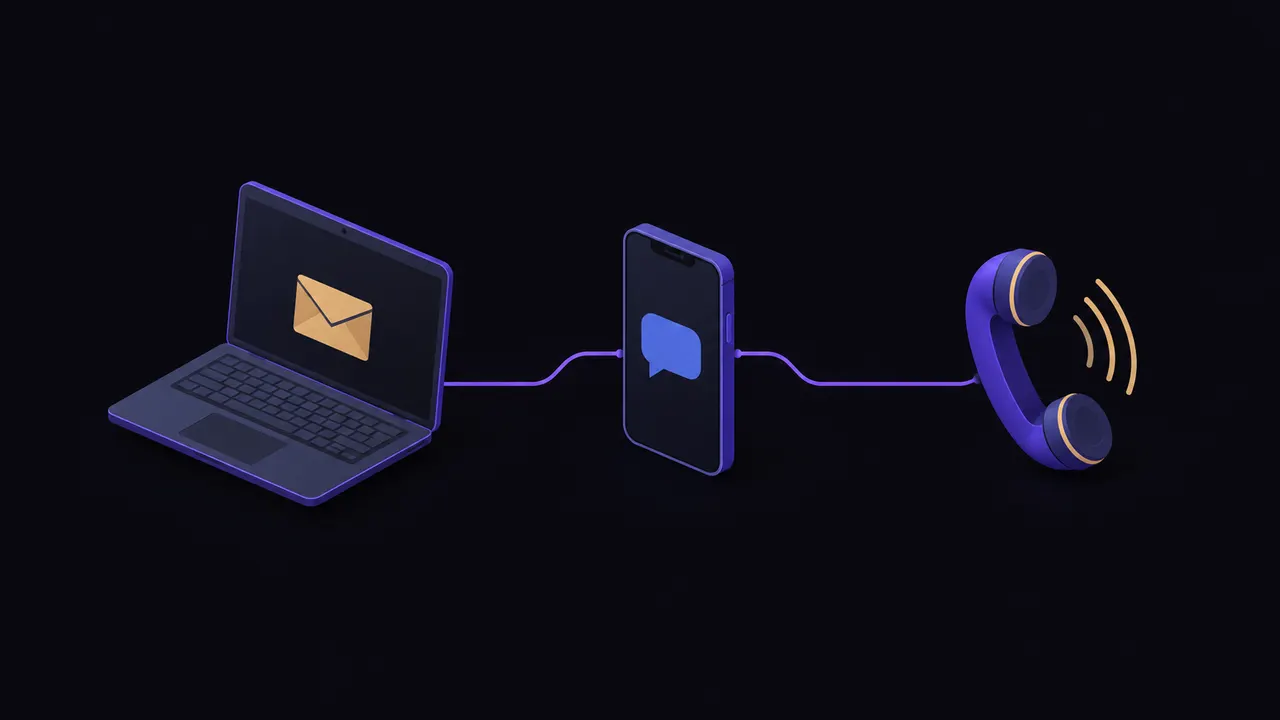
Simulations run over email, SMS (smishing), and voice (vishing). The platform spaces sends at realistic intervals and randomizes timing so nothing clusters. Every open, click, credential submission, and report lands with a millisecond timestamp for full auditability.
Phase 4: Instant Micro-Training and Risk Scoring
Fail a simulation and a contextual micro-lesson appears at once. It names the red flags the employee missed and shows the right move. The risk scoring engine then recalculates their Human Risk Number (HRN) and adjusts future frequency and complexity. This closed loop compounds, usually a 40-60% drop in risky clicks within 90 days.
Hunto AI vs Traditional Phishing Simulation Platforms
Teams shopping for phishing simulation software usually weigh KnowBe4, Proofpoint, and Hoxhunt. The table shows where Hunto AI's autonomous approach pulls ahead.
| Capability | KnowBe4 / Proofpoint | Hoxhunt | Hunto AI |
|---|---|---|---|
| Scenario source | Static template library | Curated + some AI | Live threat-intel + generative AI |
| Personalisation | Role-based tags | Adaptive paths | Per-employee AI personalisation |
| Channels | Email only | Email + limited SMS | Email + vishing + smishing |
| Campaign management | Manual setup | Semi-automated | Fully autonomous (agentic AI) |
| Risk scoring | Basic click rate | Engagement score | Human Risk Number (HRN) + dark-web correlation |
| Micro-training | Post-campaign modules | In-the-moment tips | Instant contextual micro-lessons |
| Compliance evidence | PDF reports | Dashboard exports | Timestamped audit trails for 12+ frameworks |
| Threat-intel integration | None | Limited | Native DRP + dark-web monitoring |
Want a KnowBe4 alternative or Proofpoint alternative that drops the manual overhead and posts better numbers? Hunto AI's agentic approach is a step change in phishing simulation software.
Phishing Simulation Use Cases by Role
Each role pulls different value from a security awareness training platform. Here is how Hunto AI serves each one.
CISO / VP Security
CISOs get board-ready risk metrics from the Human Risk Number dashboard. Real-time phish susceptibility data backs investment calls and shows auditors measurable risk reduction. Because the platform runs itself, your team drops campaign logistics and works on strategy instead.
Security Operations (SOC) Team
SOC analysts get cleaner phishing-report triage. When an employee hits the one-click report button, the platform sorts real threats from simulations and cuts alert fatigue. Vishing and smishing results flow into incident-response workflows for sharper cross-channel detection.
Compliance & GRC Teams
Compliance officers get timestamped, exportable evidence mapped to RBI, DPDP, SOC 2, ISO 27001, PCI DSS, HIPAA, GDPR, NIST CSF, and CMMC controls. Audit-ready reports generate on their own, so no one chases campaign screenshots before an assessment. Our GRC Autopilot automates the rest of the workflow.
IT Administrators
IT admins deploy in minutes over API or SCIM. User provisioning, group sync, and allow-listing happen automatically, so simulations reach every inbox without hand-configuration. Cloud, on-premise, and hybrid options fit any setup.
HR & Learning Development
L&D teams use micro-training completion data and engagement analytics to support broader security culture work. Adaptive difficulty keeps training challenging without piling on employee anxiety.
Measuring Phishing Simulation ROI
Security leaders have to justify phishing simulation software with hard numbers. Hunto AI gives you an ROI framework built on measurable outcomes, not vanity metrics.
Leading Indicators
- •Click-through rate (CTR) decline: Track the percentage of employees clicking simulated phishing links over time. Hunto AI customers see 40-60% reductions within 90 days.
- •Report rate increase: Measure the percentage of employees who correctly identify and report simulated phishing attempts via the one-click button.
- •Human Risk Number (HRN) trend: Monitor the organisation-wide and departmental HRN over rolling 30/60/90-day windows.
- •Time-to-report: The average time between an employee receiving a simulated phish and reporting it, a measure of security reflexes.
Lagging / Financial Indicators
- •Reduction in real phishing incidents: Fewer successful credential compromises, BEC losses, and malware infections attributable to human error.
- •SOC ticket deflection: Improved employee reporting accuracy reduces false-positive triage workload.
- •Compliance cost savings: Automated audit evidence generation saves hours per assessment cycle.
For detailed benchmarks and industry data, see our phishing trends 2025 analysis and phishing attack statistics report.
Human Risk Management: Beyond Phishing Simulation
Phishing simulation is one slice of human risk management. Hunto AI joins simulation data with external threat intelligence and compliance posture, giving security leaders one view of human-layer risk.
When simulation failure flags a high-risk employee, the platform checks their corporate credentials against dark-web breach databases through the Digital Risk Protection module. Find leaked credentials and an automated workflow kicks in. It enforces a password reset, verifies MFA, and notifies the manager, no manual SOC step needed.
That turns phishing simulation from a standalone awareness exercise into an active risk-reduction engine, closing the loop between human vulnerability and external exposure. Our case studies show how teams cut overall human risk this way.
Getting Started with Hunto AI Phishing Simulation
An autonomous phishing simulation programme does not need months to stand up. Here is the usual path from sign-up to measurable risk reduction.
Connect & Provision (Day 1)
Integrate via API, SCIM, or CSV upload. The platform auto-discovers users, syncs groups, and sets allow-listing so simulations land in the inbox.
Baseline Assessment (Days 1-7)
The AI runs a silent baseline campaign across the organisation to establish initial Human Risk Numbers without employee awareness, providing an unbiased susceptibility baseline.
Adaptive Simulations Begin (Day 8+)
The autonomous engine takes over, delivering personalised, multi-channel simulations at optimised intervals with instant micro-training on failure.
Continuous Improvement (Day 30-90)
Monitor HRN trends, CTR reductions, and report-rate improvements through real-time dashboards. Compliance reports generate automatically for upcoming audits.
Want to see it run? Our guide to automated phishing simulation tools digs into what autonomous platforms deliver.
Frequently asked questions
This section answers Common Questions About AI Phishing Simulations to help you understand how Hunto AI protects your digital assets and brand against external cyber threats.
Phishing simulation is the practice of sending controlled, realistic phishing emails (and increasingly vishing and smishing messages) to employees to measure their susceptibility and provide just-in-time training. It matters because over 80% of breaches involve a human element. Regular simulations build muscle memory so employees recognise and report real attacks before damage occurs. Modern platforms like Hunto AI use AI to personalise scenarios and adapt difficulty, making simulations far more effective than static template libraries.
AI improves phishing simulation in three ways. First, it generates contextual lures based on real attacker tactics. Second, it adjusts difficulty by role, department, and past performance. Third, AI risk scoring recalculates each person's Human Risk Number so training adjusts without manual campaign work.
Best practice is continuous, adaptive simulation rather than periodic batch campaigns. Hunto AI's autonomous engine determines optimal frequency per employee based on their risk profile. High-risk individuals might receive weekly simulations across multiple channels, while low-risk employees receive monthly tests. This approach prevents both alert fatigue and complacency, and it keeps the organisation in a constant state of readiness rather than cycling between tested and untested periods.
The Human Risk Number is a composite metric that quantifies an individual's or organisation's phish susceptibility. It factors in click-through rates, report rates, time-to-report, credential submission behaviour, simulation difficulty level, and cross-channel performance (email, vishing, smishing). Hunto AI establishes a baseline HRN within 7 days and tracks it continuously, giving CISOs a single metric to report to the board and measure programme effectiveness over 30, 60, and 90-day windows.
Hunto AI replaces manual template selection and scheduling with autonomous campaigns. It uses live threat intelligence, multi-channel simulation, per-employee personalization, dark web credential checks, and timestamped audit evidence for 12+ frameworks.
Yes. RBI, PCI DSS, ISO 27001, SOC 2, HIPAA, GDPR, NIST CSF, and CMMC require or recommend phishing awareness testing. Hunto AI generates timestamped evidence with campaign dates, participation rates, training records, and risk trends mapped to framework controls.
Explore more modules

Get A Free Demo
Ready to safeguard your organization's digital presence? Choose your plan and start your free trial.